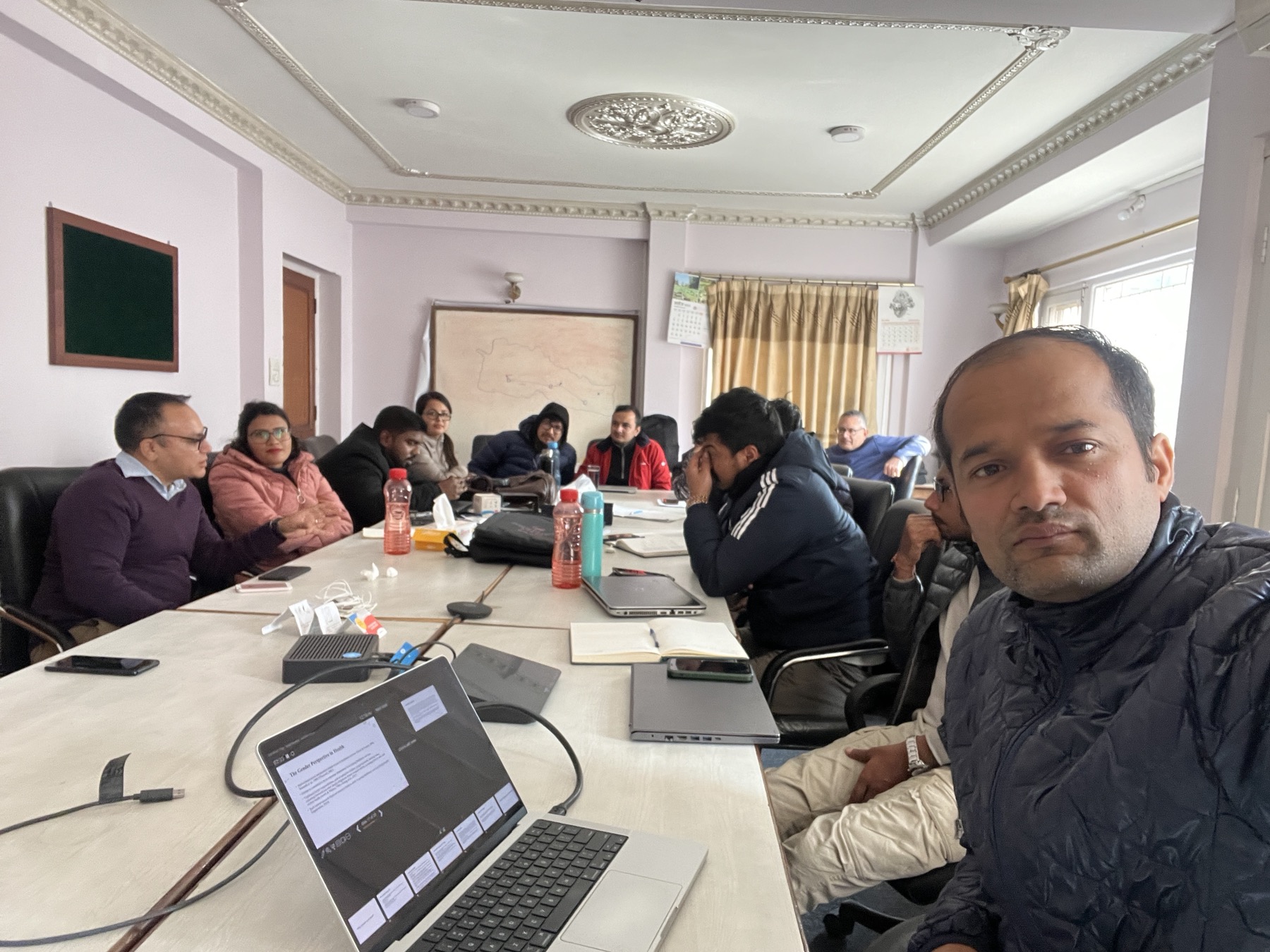
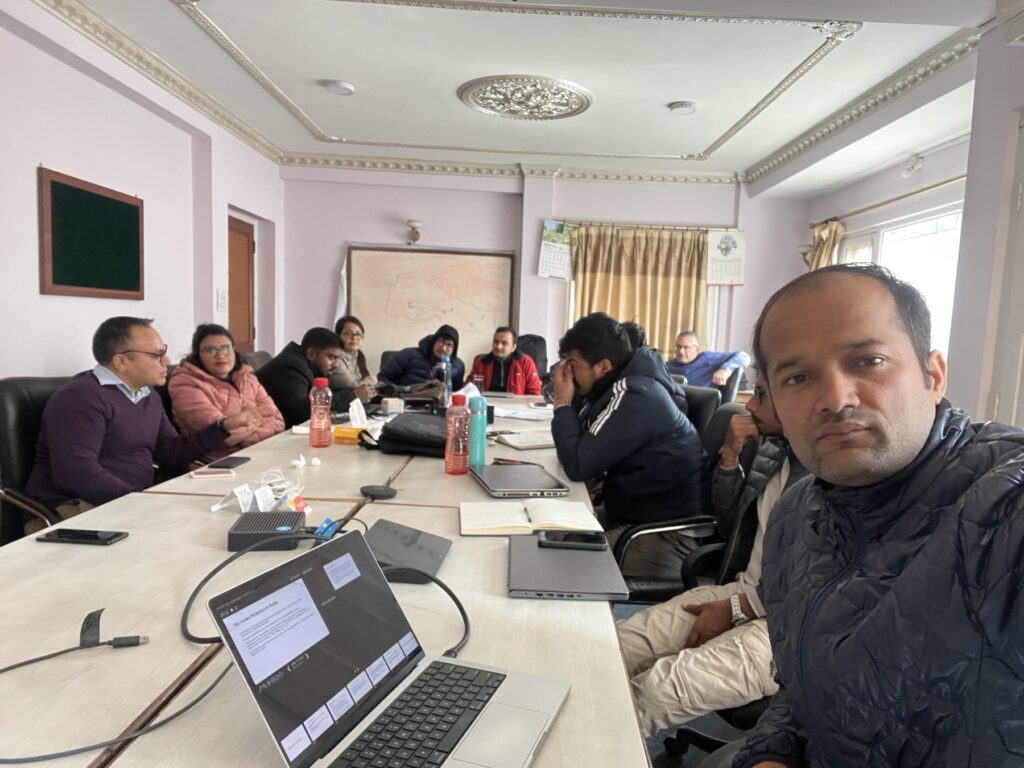
The Telemedicine Society of Nepal (TMSoN) shared its experience and practical insights with students from the Department of Health Informatics, Kathmandu University (KU), as part of its ongoing support for the implementation of a telemedicine course under KU’s Master’s program in Health Informatics.
Demonstrating its commitment to academic collaboration and capacity building, TMSoN welcomed the inaugural batch of Health Informatics students to its office, co-located with the National Research and Education Network (NREN). The day-long interaction provided students with first-hand exposure to real-world telemedicine practice and digital health implementation.
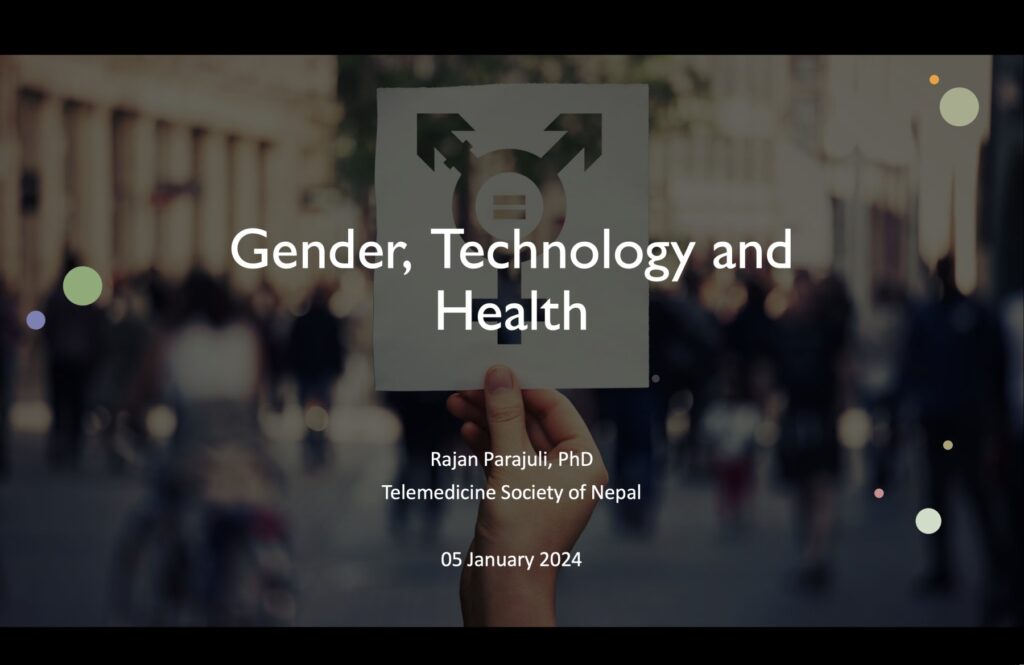
During the program, Dr. Rajan Parajuli, General Secretary of TMSoN and Executive Director of NREN, delivered a session focusing on the intersection of gender, technology, and health. His presentation emphasized the importance of addressing social, cultural, and human dimensions when designing and delivering telemedicine and digital health services, highlighting equity and inclusiveness as critical considerations.
The program also featured a hands-on session on telemedicine peripheral devices, facilitated by Mr. Abhimanyu Pandey, allowing students to gain practical exposure to tools commonly used in telemedicine service delivery.
Additionally, Dr. Udaya Koirala, Chairperson of the Telemedicine Society, facilitated a session on the complexities of telemedicine service delivery, outlining the interconnected clinical, technical, organizational, and policy factors required for successful telemedicine implementation.
This collaborative engagement between TMSoN, Kathmandu University, and NREN reflects a shared commitment to nurturing a well-rounded and informed generation of health informatics professionals, equipped to contribute effectively to the evolving landscape of telemedicine and digital health in Nepal.